The 100-meter dash lasts only 10 seconds, but some people spend years training for those few moments. This commitment, whether seen as madness or the truest way to live, captures the film’s central question.
With this, the animated film 100 Meters emerges as an unprecedented philosophical sports anime that uses the simple sport of sprinting as its backdrop to continually explore the meaning of giving it your all.
Thinking you know what to expect from a sports anime might leave you surprised, as this film defies expectations throughout its 106-minute run, building on its unique perspective.
Trivia: The Abyss of the 10-Second 100m Dash
The core message is that the film’s race scenes stand out for their realism, grounded in elite athletes and meticulous animation, and demonstrate true respect for sprinting.

About the Original Work and Author
The main point is that Uotoyo’s debut manga, short yet impactful, remains popular and serves as the foundation for the anime “100 Meters.”
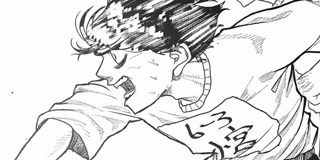
The Manga Artist Uo Yutaka
Uo Yutaka won several awards, including becoming the youngest recipient of the Osamu Tezuka Cultural Prize Grand Prize for Manga, for his manga *Chi. —On the Movement of the Earth—*. He began his career with this work, *Hyakuemu.* “Chi.” was adapted into an anime and aired on NHK General and NHK BS from October 2024 to March 2025, with a global Netflix release. It became a major contemporary hit, trending on social media after its broadcast. The franchise continues with the theatrical compilation film “Chi. —On the Motion of the Earth— Part 1: ‘Faith and Motion’” in 2025.
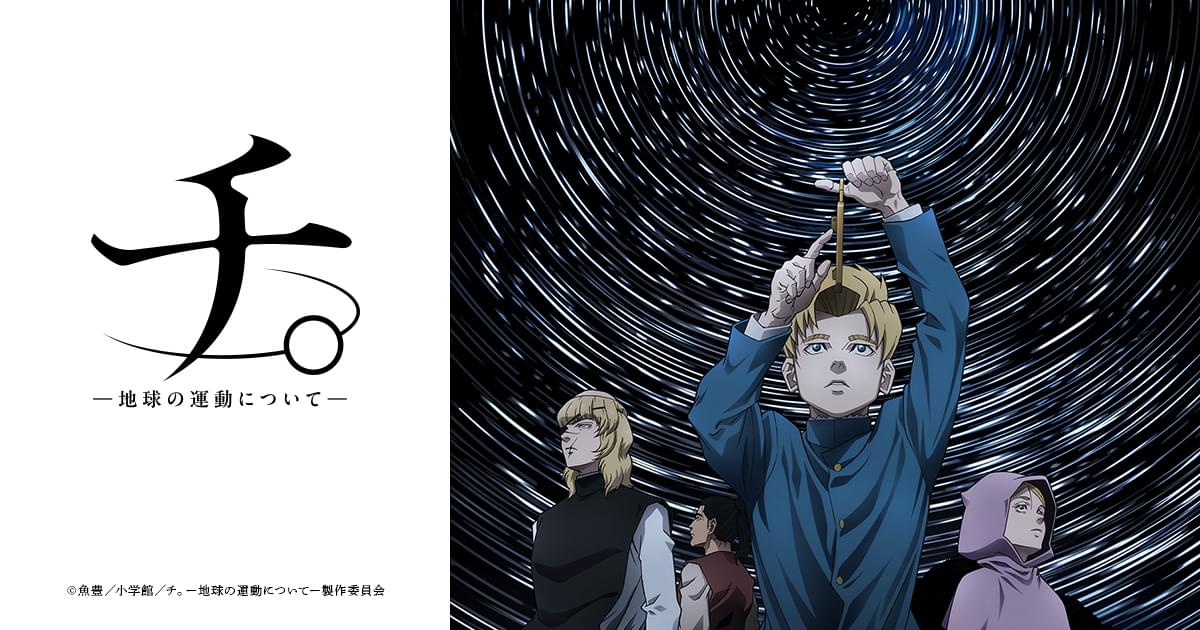
Uo Yutaka was born in 1997 and wrote his first manga at just 21. His talent for showing an athlete’s life from childhood to adulthood, while weaving in deep questions about life and existence, is impressive for someone so young.e.
The key message is that Uo Yutaka’s works are united by a deep respect for individual inquiry and self-driven exploration, as seen in his various protagonists.
The Rare Talent of Director Kenji Iwaizawa.
The director behind the theatrical anime “100 Meters” is Kenji Iwaizawa, a leading figure in indie animation who won top prizes at the 43rd Ottawa International Animation Festival and the Entertainment Division of the 24th Japan Media Arts Festival for his film “Music” (2020).
“Music” is a rotoscoped animation that took seven years to make, mostly self-produced. It follows young people with no musical background who start a rock band and grow together. The film’s unique style was praised in Japan and abroad, and it even earned an Annie Award nomination.
The main point is that the animation team behind “100 Meters” is a blend of commercial and indie talent, creating a unique work that benefits from this collaborative dynamic.

The Complete Portrait of a Man, Woven Through Three Eras
What sets the anime “100 Meters” apart from other sports anime is its narrative structure. The theatrical anime “100 Meters” is divided into three parts—the Elementary School Arc, the High School Arc, and the Working Adult Arc—and aims to portray Togashi’s life in its entirety.
Elementary School Arc: Encounters and the Meaning of Talent
At the start, Togashi is an elementary school student. He is naturally fast, which brings him friends and a sense of belonging. Then Komiya, a transfer student, arrives. Seeing Komiya run to escape a painful reality, Togashi tells him, “If you can run 100 meters faster than anyone else, most problems will be solved.”
That one comment changes both their lives. Komiya finds freedom in running and gets faster every day. One evening, an unofficial 100-meter race by the river marks the start of their rivalry.
High School Arc: The Limits of Talent and the Meaning of Friendship
In high school, Togashi doesn’t want to join the track team. His time is stalled, and he feels pressure. A senior on the failing team asks him to run one race. Feeling the “wind,” he is pulled back into running.
Then, in the 100m final at the National High School Championships, Togashi reunites with the Komiya of the past. Komiya was already well on his way to becoming a top runner.
Working Adult Arc: The Meaning of Giving It Your All
Even after starting his career, Togashi continues to run as an athlete. But his best days seem behind him, and his job contract is at risk. Then he meets Kaido, a senior runner. Kaido’s words make Togashi face the question, “Why do I run?”
Then, facing a career-threatening muscle tear, he finds himself running alongside Komiya once again in his final race.

Analysis containing spoilers / Regarding the final scene
The ending of the theatrical anime 100 Meters. leaves the outcome of the battle unresolved. Isn’t this a deliberate artistic choice?
Throughout the story, the central questions were not “Who won?” but rather “Why do we run?” and “Are we truly giving it our all?” The moment Togashi decided to stand at the starting line despite his injuries, his questions were already resolved. The narrative logic—that the outcome is merely a consequence of what comes after—is crystallized in this ending.
The structure in which Kaido’s paradoxical statement—“If my victory is unrealistic, then I’ll do my utmost to escape reality”—is reflected in Togashi’s own approach to the race is masterful. The theatrical anime *Hyakemu.*, which depicts the “joy of giving it your all”—a feeling accessible only to those who have freed themselves from calculation and preconceptions—can be said to be a work that sought to show what lies beyond the result.
10 seconds, unlike anything you’ve ever seen, created by rotoscoping
When discussing the theatrical anime *100 Meters.*, it is essential to mention its animation techniques. The theatrical anime “100 Meters” employs rotoscoping throughout.
What is Rotoscoping?
Rotoscoping is a technique that involves tracing the movements of real people captured on film and incorporating them into animation. It is reported that the running motions of professional sprinters were converted into 3DCG, which served as the basis for the hand-drawn animation. This is not a simple tracing process; instead, incorporating 3DCG as an intermediate step enhances the precision. The difference from motion capture is that, while motion capture primarily aims to convert movements into 3D animation, rotoscoping results in a final hand-drawn animation.
The “Smoothness” of Everyday Scenes and the ‘Vividness’ of Race Scenes
The core idea is that rotoscoping gives routine scenes a lifelike quality, which might seem odd at first, but powerfully enhances the intensity and authenticity during the race sequences.
You see athletes’ muscles as they accelerate, water splashing from spikes, and unsteady steps at the finish. Even as animation, it feels real. One three-minute scene took a year and over 9,800 frames to draw, further boosting realism.
Trivia: The History of Rotoscoping and Rock ‘n’ Roll Mountain’s Innovation
Rotoscoping has been around since Disney used it in the 1910s, but Director Iwaizawa adds a modern twist by combining it with 3D animation. They turn a real sprinter’s movements into 3D animation, then finish it by hand, which makes it feel more human than motion capture. Careful sound work, like putting microphones on spikes and spraying water on a real track, helps make the 100-meter race feel like it’s happening right in front of you.
What does this story say to those who keep running despite knowing the gap in talent?
The first thing I noticed after watching *100m* was how real the characters’ words felt. They didn’t sound like typical sports anime lines—they felt like they were speaking directly to people today who are working hard, struggling, and still chasing their dreams.
Komiya Was the True Genius
Togashi, as an elementary school student, was not a true genius. Komiya was the true genius. A transfer student who appeared out of nowhere, with no context, approached national-level speed after being taught just a little about running technique. That premonition of defeat—the first Togashi ever felt as an elementary school student—is the very starting point of the theatrical anime *100 Meters.*
Whether it’s sports, music, school clubs, or work, many people have met someone more talented than themselves and have let go of their dreams. The story also shows that even talented people have their own struggles, so anyone can see themselves in the characters, no matter which side they’re on.
The weight of lines that strike a chord with working adults
The phrase that runs through the entire story—“If you can run the 100 meters faster than anyone else, most things will work out”—sounds like simple logic to a child: “If I win the 100-meter dash, I’ll be popular in class.” However, when this phrase reappears in the working adult arc, its meaning has completely transformed. It has been elevated into an existential proposition: “If you can give it your all, everything in life will work out.”
Whether it’s work, hobbies, or relationships, people who feel they’re not giving their all will find this line quietly resonates with them.
Kaido, who appears in the working adult arc, best captures how people feel today. His line, “Reality can’t keep up with my will,” is a quiet pushback against a world that values logic and efficiency above all. By seeing “escaping reality” in a new way, his words encourage anyone facing tough career choices or feeling pressured by numbers and evaluations.
Differences from the Original Work and the Reason for Cutting the Monologues
In the original manga, you get to read the characters’ thoughts through long monologues, but the film leaves these out. Instead, it shows their feelings through animation—like their faces while running, their breath in the rain, and how they move after finishing a race. Since these moments aren’t explained in words, every line of dialogue that’s left hits even harder.
The Presence of Tori Matsuzaka and Shota Sometani as Voice Actors, and the Original Work’s Shortcomings
Tori Matsuzaka, who voices Togashi, blends in perfectly with the professional voice actors. His clear speech, shaped by his work in film and TV, and his acting—holding back emotion but letting passion show through—make it feel like his live-action skills come through in his voice. He does a great job of showing Togashi’s complex character through his voice alone.
Some people are split on Shota Sometani’s performance as Komiya, with some saying he sounds a bit stiff. But since the character is quiet and distant, Sometani’s more restrained style seems like a deliberate choice, similar to live-action acting. By holding back emotion, he lets viewers imagine what Komiya is feeling inside.
Atsumi Tanezaki voices young Togashi, and Aoi Yūki voices Komiya, and both are outstanding. Their youthful energy connects perfectly to the adult parts of the story. Kenjiro Tsuda’s deep, calm voice as Kaidō gives the character real depth.
The Boldness of Condensing It into 106 Minutes
Some fans of the original manga might feel that the high school arc is missing something. The film simplifies the rivalries and friendships from the manga, so the characters’ relationships can feel a bit shallow if you haven’t read the original. Also, it might take a little time to get used to the way everyday scenes move with rotoscoping.
However, these choices stem from the animation film’s necessity to decide “what to select and what to discard” within the 106-minute runtime to adapt the content of the manga’s Volume 5 (split into two volumes in the new edition). When viewed with an understanding of what *100 Meters.* sought to convey, the inevitability of these choices becomes clear.
Summary: The Question of Life Itself, Unfolding 10 Seconds Ahead
The theatrical anime *100 Meters.* was a film that left something lingering in the body—something that the word “moving” alone cannot fully capture.
“Were you truly serious?”
That’s the main question this film keeps asking. The story of Togashi and Komiya isn’t just about great athletes—it’s also a mirror for anyone who was once passionate about something, or who still struggles to take things seriously.
Uotoyo’s talent for adding philosophy to a sports manga, together with Kenji Iwaizawa’s vision as director, created something special. The whole 106-minute film builds up to those final 10 seconds.
If you’re a working adult feeling stuck, I really recommend watching this film alone late at night. When the credits roll and Hige Dandism’s “Rashisa” plays, you’ll probably find yourself reflecting on your own life.