Motivated by a promise to his brother, the main character pushes to become the best soldier he can be. All his training is put to the test when he faces an unknown killing machine, forcing him not only to fight for survival but also to uphold the vow he made.
After surviving brutal training and even facing monsters from space, he comes to one conclusion.
That word is “Goal.”
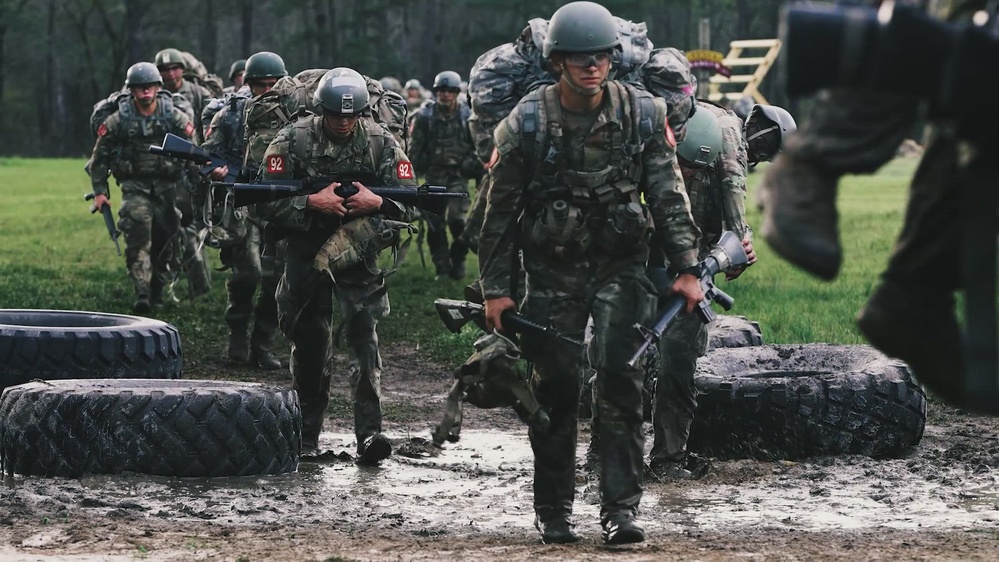
At this point, you might be wondering about the training setting featured in the film. What is “RASP (Ranger Assessment and Selection Program)” all about?
The model for the selection training depicted in the movie “War Machine: The Unknown Invader” is the “RASP (Ranger Assessment and Selection Program),” the recruitment screening program for the U.S. Army’s 75th Ranger Regiment.
RASP is an 8-week course designed for soldiers ranging from Private First Class to Sergeant (E1–E5), training them in the basic skills and tactics necessary to perform duties with the 75th Ranger Regiment.
During training, candidates must pass physical and psychological tests, including a 12-mile (approximately 19 km) pack march (carrying a 35-pound pack in dry conditions), solo navigation using maps and a compass day and night, and a first-aid exam. Only those who pass are awarded the “Tan Beret” and the “75th Ranger Regiment Scroll,” earning the right to join one of America’s most elite units.
The portrayal in this film, where candidates are referred to only by numbers, embodies the spirit of elite military training by temporarily stripping away individual identities to test only pure ability and mental fortitude.

This is a new Netflix action film from the director of “The Expendables 3.”
Patrick Hughes, who directed “The Expendables 3: World Mission” and “The Hitman’s Bodyguard,” is behind “War Machine: Unknown Invader.” If you like movies about tough battles, pushing human limits, and classic action payoffs, you’ll get a sense of what this film is like.
Alan Ritchson stars in the lead role. He’s become well-known worldwide for his work in “The Reacher” on Amazon Prime Video.
The first 30 minutes focus on the main character’s past.
The movie opens in Afghanistan. A strong man helps a stranded convoy and finds his brother. They vow to become Rangers, but a sudden Taliban ambush changes everything.
He alone survives. The memory of carrying his dying brother, collapsing just 100 yards from safety, haunts him.
Years later, he enters Ranger selection training as “Number 81.” Among all the candidates crawling through mud, climbing walls, and training for combat, his impressive build makes him stand out.
The first 30 minutes of the film are especially strong. At first, Number 81 is shown as a lone wolf.
Though seen as a leader, he refuses the role, fearing he’ll cause someone else’s death.
The moment training turns into “hell,” the movie truly begins
Around 30 to 40 minutes in, the main story kicks off. The huge killing machine from the poster finally appears in the training forest. The cadets find it during an exercise, and it turns out to be an alien weapon that can track and destroy anything in its way.
The robot’s entrance is both creepy and fascinating. When its huge shadow comes out of the forest, and blue light sweeps the area, it gives you chills. Its shape, part human and part predator, leaves a strong impression.
Run, Survive, and Fight
The cadets run, cross waterfalls, get swept by rapids, and use abandoned tanks. The nonstop chase keeps things exciting. The main character is unusually lucky; while others fall, 81 survives almost untouched—a bit of action-movie luck we must accept.
The ending suggests there may be a sequel. (Contains spoilers for those who have not watched yet.)
At the climax, 81 uses his mechanical skills to block the Machine’s vents with rocks, causing it to overheat and explode. He wins with clever thinking, not just firepower.
Director Patrick Hughes stated in an interview with ScreenRant, “I wrote it as a standalone story, but if I get the chance to make a sequel, I know exactly where it’s going—I’ve already sketched it out.” Richson himself has explicitly stated that a sequel would be “the best thing ever” and has even boasted that “we could make eight sequels.”
Netflix hasn’t officially announced a sequel yet, but with 39.3 million views, more news could be on the way soon.
Alan Ritchson: A Human Weapon
Alan Ritchson is a key part of this film. After making his name in the “Reacher” series, he once again plays a quiet, tough, and solitary warrior who keeps his pain inside.
Ritchson has described the shoot as one of the most physically grueling in film history, noting that he personally performed stunts—including underwater scenes that required him to hold his breath for 2 minutes.
Critics ask, “Isn’t this just another Reacher?” The character does look similar, but Ritchson’s strong presence anchors the film. Even with a few lines, his charisma makes him unmistakably the lead.
Scenes where cinematography and direction shine, but CGI falls short

From fighting the machine to racing through forests and down rapids, the film balances natural beauty and real tension. Filming was much tougher than it seemed.
Director Hughes revealed in an interview with ScreenRant, “We shot in actual outdoor environments. We had to use helicopters to transport equipment and crew.” Furthermore, Ritchson reportedly performed the scene in which he crosses a Grade 5 whitewater rapid in New Zealand.
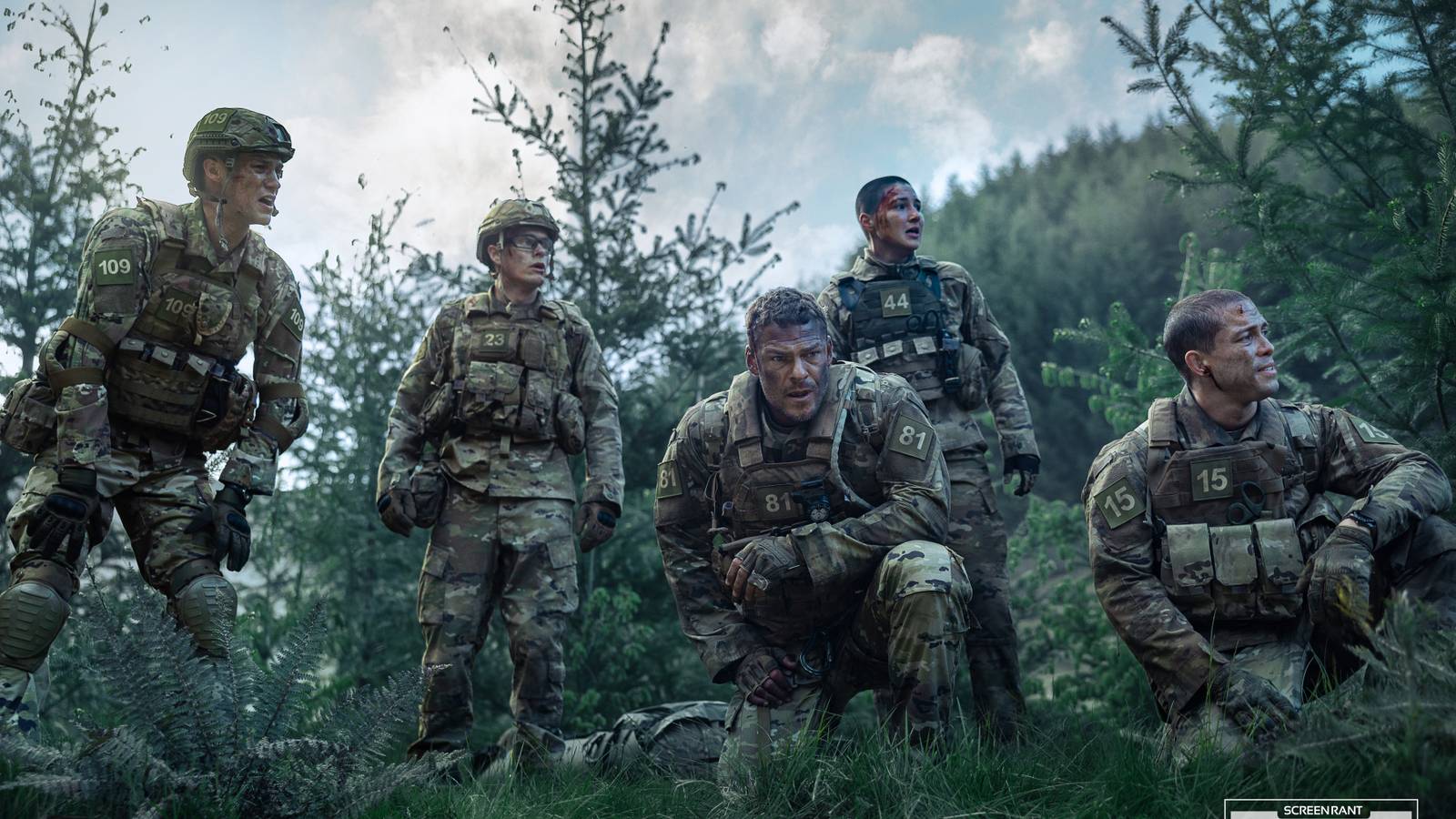
In an interview with The Hollywood Reporter, Ritchson candidly stated, “Filming was truly grueling. I doubted many times whether I would make it to the finish line. This is the first project where I’ve been pushed to my physical limits like this.” Those words were a somewhat fateful coincidence, directly mirroring the story in which the protagonist, 81, tells himself, “Never give up.”
Ritchson also noted, “The filming was based entirely on practical effects, with visual effects added later,” suggesting that the film’s intense action sequences were created using real bodies and environments. In particular, for the underwater scenes, he personally performed the difficult stunt of diving from one end of the pool to the other while holding weights—an effort he later described as “a miracle that happened only that day.”
Some CGI in the whitewater scenes appears less realistic, which may distract briefly. However, the excitement and action sequences outweigh these flaws and keep the overall experience entertaining.e.
American Soldiers vs. Unknown Aliens
When I watched War Machine: Unknown Invaders, I immediately thought of Predator (1987). Both films focus on a chase—elite soldiers must survive, not fight head-on, against a superior enemy. This setup gives both films a unique survival-horror feel, despite being war movies.
Other similarities go beyond the surface as well.
- Matching Settings and Composition: Both are set in “deep forests,” where elite units are hunted one-sidedly by unknown entities. Tall trees, shadows, fog—that atmosphere has been carried over almost intact across more than thirty years.
- The Despair of Ineffective Weapons: The story is driven by the despair of bullets proving ineffective. Similarly, in this film, the helplessness of even rocket-propelled grenades failing to “scratch a single hair” drives the soldiers to flee.
- Resonance in the Protagonists: They are rugged, taciturn, solitary soldiers bearing inner wounds. The protagonists of both films share a strikingly similar profile, and it is no exaggeration to say that Alan Ritchson is often compared to Schwarzenegger.
Clear Differences. On the other hand, the portrayal of the “enemy”—the core of both films—is starkly contrasted. The Predator is an intelligent alien who enjoys the hunt and values honor and trophies.
In contrast, the robots in this film are depicted as having no purpose or emotion whatsoever; they exist solely as “machines” designed for destruction. This inorganic nature generated a unique, horror-like terror specific to this film. Game creator Hideo Kojima has also noted that it is “a film that feels like a cross between Predator and his own series, Metal Gear.” This film can be said to faithfully inherit the Predator legacy while forging its own path forward.
Summary: “Never Give Up”—Those words are also a cheer for the film itself

The sci-fi survival film leaves the impression that the story is predictable, that most characters lack depth, and that there are numerous scenes in which the protagonist benefits from an overwhelming “hero’s advantage.”
A simple motivation: “to fulfill a promise to my brother.” The phrase “Never Give Up (DFQ).” And the classic narrative arc: from training to escape, and from escape to counterattack. I believe the power of this film lies not in its complexity, but in its purity.
A critic’s review describing it as “the kind of movie you watch on a Sunday afternoon” likely hits the nail on the head. Clear your mind, grab a beer, and let it play on a weekend night—Netflix still needs movies you can enjoy just like that. And this film fills that role perfectly.
If a sequel ever happens, what will 81 fight against? What is the true purpose of the mysterious killing machine?—And why not experience for yourself the story of a man who “never gives up”?