The film centers tightly on a father struggling to support and protect his daughter, balancing its raw sincerity with surprising moments of coolness. This clear focus sets the movie apart as a standout of the year.
The title “One Battle After Another” literally means “battle, then battle,” and the Japanese subtitles translate it as “combat, then combat.” This title sums up the ongoing cycle of conflict in the story. It’s more than just a catchy phrase for an action film; it gets to the heart of the story, where each generation continues the struggle. By the end credits, it feels like that responsibility is handed over to us, the viewers.
About the Original Work
The inspiration for the action film comes from the novel (published in 1990) by a leading figure in contemporary American postmodern literature.
Set in California from the 1960s to the 1980s, the story follows former hippies and radical activists as they try to survive as society grows more conservative during the Reagan era. The main themes are the relationship between father and daughter, the fall of a former revolutionary, and facing the past. Although some called it “Pynchon Lite” when it first came out and consider it his easiest novel to read, it remains a complex story with a nonlinear timeline and a postmodern style.
Please note that the film credits use the phrase “inspired by” rather than “based on.” This indicates that, while the core premise is drawn from the original novel, the movie makes several significant changes to both its narrative structure and details. The following points outline the key differences in adaptation.
Time period: The novel unfolds in the 1980s, during the Reagan administration. For the adaptation, the filmmakers shifted the setting to modern-day America in the 2020s, updating the events’ context.
- Protagonist’s name: Zoid Wheeler → Bob (Revolutionary-era name: Pat Calhoun)
- Daughter’s Name: Prairie → Willa Ferguson
- Mother’s Name: Frenzy Gates → Perfidia Beverly Hills
- Change in Antagonist: DEA Agent Brock Vond → Military Officer Colonel Rockjoe
- Portrayal of the Revolutionary Organization: The novel presents the group “French 75” primarily through a series of character flashbacks, which add layers to the narrative. In contrast, the film incorporates the organization directly into the present-day storyline, altering how the audience sees and experiences their actions.
- Story Structure: The novel uses a nonlinear narrative, frequently shifting between past and present. The adaptation changes this approach, opting for a mostly linear progression focused on an action-driven chase, which streamlines the unfolding of events.
- Streamlining Surreal Elements: The original work is notable for surreal, comic, and fantastical sequences, including a ninja group and characters resembling the dead. For the adaptation, these elements are omitted or only hinted at, for example, in references like “Ninja Academy,” to favor a more grounded cinematic tone.
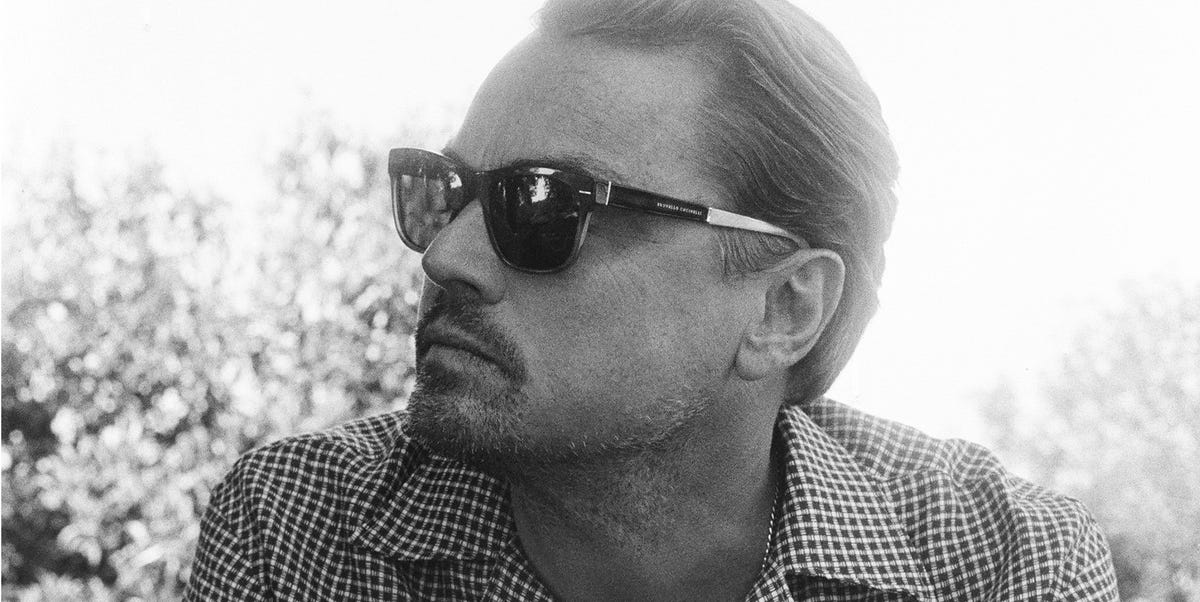
In the interview, director Paul Thomas Anderson discusses how difficult it was to adapt Thomas Pynchon’s novel for the screen. At first, he planned to follow the book closely, but he found it difficult to bring Pynchon’s complex structure, many characters, and surreal humor to the screen. So, he decided to focus on the main idea: what happens to people left behind after a revolution. The film became an original story inspired by Pynchon’s worldview, rather than a direct adaptation. Anderson describes the process as “a long struggle,” but says that the creative freedom from working in a different medium was what made the project possible.
An Invitation to a Visual Experience: Paul Thomas Anderson’s New Frontier

Director Paul Thomas Anderson is best known for films such as Boogie Nights (1997), Magnolia (1999), and There Will Be Blood (2007). One Battle After Another*marked his first foray into a new genre for him: an action film—albeit one without flashy action sequences.
Watching it on streaming, the first thing that struck me was the visual texture. The unique look—capturing the dust-filled, sun-drenched streets of California with a grainy, grainy image reminiscent of 1970s crime films—had me wondering what it was all about from the very first moment.
A unique style that blends comedy and thriller
The action film One Battle After Another is a unique work that defies easy description. Amidst the thrills of gunfights, car chases, and riots, elements of black comedy that make you burst out laughing are seamlessly woven into the narrative.
Particularly memorable is the scene where Bob struggles over the phone, unable to recall the password he set 16 years ago. In a single moment, it masterfully illustrates just how comically hollow his title as a former revolutionary has become. It’s rare to come across a scene that elicits such a chuckle while also containing such bittersweet self-mockery.
Early Cinematography: A Fusion of Documentary and Action
The prologue at the beginning of the story, depicting the terrorist activities of the revolutionary group “French 75,” feels rough around the edges compared to the scenes set 16 years later and has a documentary feel. Past events are then depicted at a brisk pace. I felt that this choice in the opening served as a major device to create contrast with the political satire and comedic developments in the latter half.
The Moment Everyday Movements Become Action
A particularly noteworthy aspect of Anderson’s direction is his philosophy of “framing casual movements as action.” Bob is walking around a room looking for an outlet and accidentally pulling down a curtain rod. In other films, these would be mundane, everyday gestures, but in this film, they somehow become movements you can’t take your eyes off.
He colored his coming-of-age films with “running” action sequences in which men and women repeatedly sprinted across the widescreen Cinemascope frame, from right to left and left to right. In this film, the shooting format shifted to VistaVision’s 1.85:1 aspect ratio, making movement along the depth axis (Z-axis) the central focus. The car chase, in which vehicles race from the foreground to the background of the frame, is also a directorial choice that maximizes this “pull toward depth.”
The “heavy, sluggish movements” of Bob, played by DiCaprio, stand out in contrast to the other characters who nimbly leap across rooftops, while he plods up and down a ladder. The comical movement as he collapses after being hit by a stun gun. The sheer absurdity of him simply “picking up the phone” is laugh-out-loud funny. I felt that this meticulous attention to physical performance, combined with DiCaprio’s talent as a great actor, creates a chemical reaction that amplifies the film’s appeal as an action movie several times over.
A Turbulent Second Act and a Spectacular Car Chase
The first hour or so feels like a “run-up,” rapidly establishing the characters and the world’s framework. To be honest, the pacing was fast, and at times it felt a bit disjointed. However, midway through, the moment the film reaches a 30-minute-long take in which the riots, the parkour skaters, and DiCaprio’s escape run intersect, all the “scattered threads” up to that point are woven into a single strand.
Andy Jurgensen, who edited the film *One Battle After Another*, has stated that the climactic car chase was a sequence brought to life through editing. Director Paul Thomas Anderson does not rely on detailed storyboards; instead, he constructs the film’s structure by combining footage shot from multiple angles in the editing room. Through cross-cutting that interweaves multiple perspectives, he organizes the action so the audience can understand the situation as tension builds. The director also prioritizes editing that doesn’t spell everything out for the audience, placing quiet shots between intense action sequences to create a rhythm of tension and release. Thanks to this editing design, the car chase becomes a highlight that generates thrills not through flashy CGI but through the skillful use of composition and rhythm.
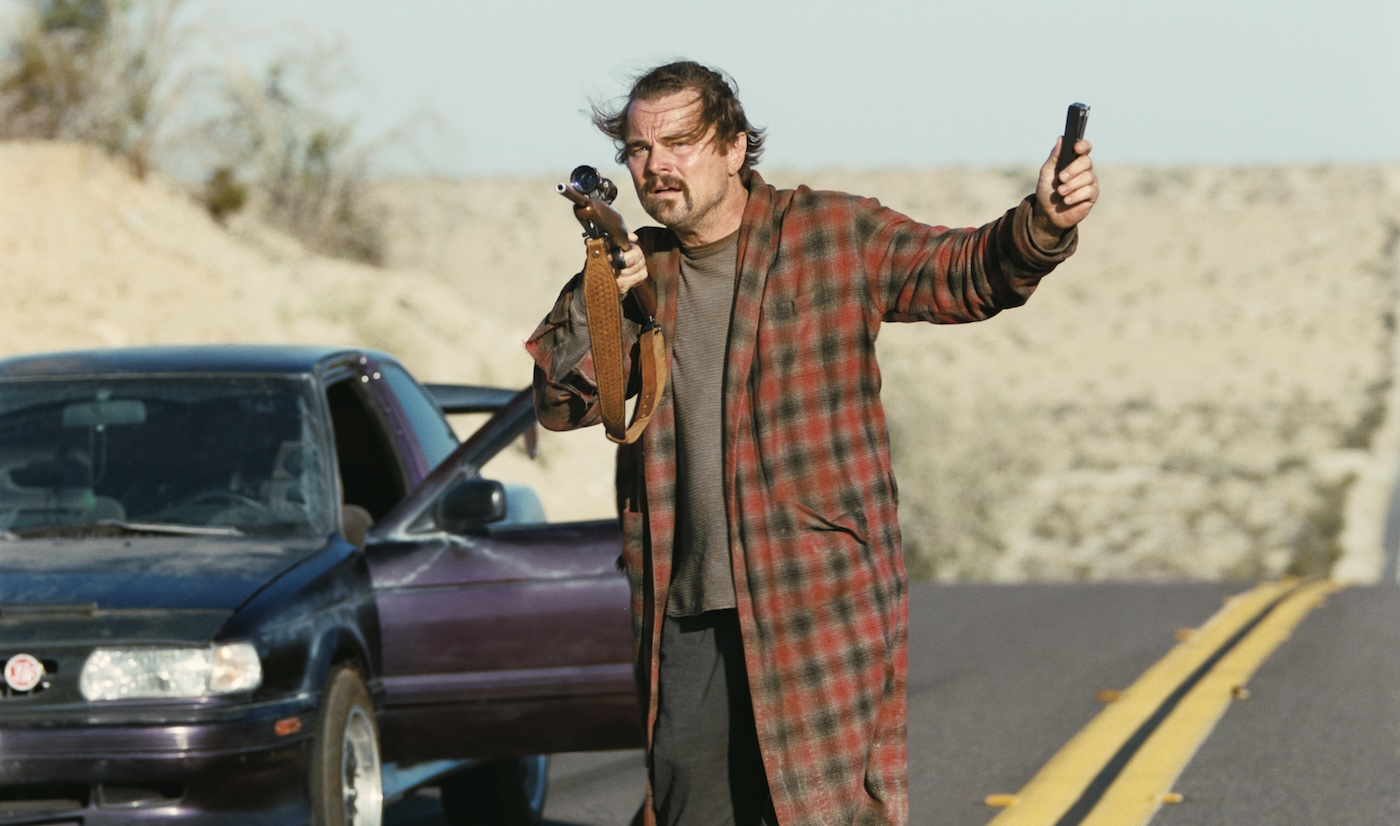
A quiet yet intense battle waged by those who dominate the screen through their on-screen presence
DiCaprio’s “Uncool” Triumph
Leonardo DiCaprio’s character Bob is nothing like the glamorous heroes he’s played before. Bob swears, uses drugs to deal with his anger, and lives a sad, ordinary life far from his days as a revolutionary. Yet, maybe because of these flaws, he becomes oddly likable. His mix of weakness and fierce love for his daughter made the film’s ending surprisingly moving.
This performance, which earned an Academy Award nomination for Best Actor, is considered one of DiCaprio’s major career achievements.
The Violent Presence That Is Sean Penn
The most shocking character in this film is Colonel Rockjoe, played by Sean Penn. He was a monstrous villain who embodied three qualities at once: beyond scary, beyond eerie, and somehow comical. His gait, the tone of his voice, and the oppressive atmosphere he created just by appearing on screen. It comes as no surprise at all that he was nominated for an Academy Award for Best Supporting Actor.
Chase Infinity as the Living, Breathing Willa Ferguson
A standout element in this film is Chase Infinity’s performance as Willa Ferguson, the daughter. Making her film debut, she holds her own alongside established talents like Leonardo DiCaprio and Sean Penn. Her on-screen presence is consistently impressive.
When acting with DiCaprio, her steady gaze and subtle emotions bring out both the humor and sadness in Bob’s character. Even in scenes with Sean Penn’s intense performance, she quietly shows inner strength without overacting. She holds her own against these powerful actors and truly becomes Willa on screen. Her calm confidence makes her seem more experienced than a newcomer.
What the Music and Visuals Convey
The music was composed by Radiohead’s lead keyboardist, a frequent collaborator of director Anderson.
The film uses percussion instruments such as xylophones and marimbas to create a unique rhythm, adding tension to the story through their clashing sounds.
One of the most impressive things is how perfectly the music matches the visuals. Throughout the film, there are moments when the music and images line up exactly, such as when the music rises as soldiers break through a barricade or when the theme begins as a character looks in the rearview mirror. These moments create excitement similar to a music video. The theme song during Bob’s escape starts with a calm piano and then builds into a big orchestral sound, capturing the wild ups and downs of the story.
The Revival of VistaVision, a Forgotten Film Technology
In an interview about the filming of the movie , cinematographer Michael Baumann discussed the challenge of applying the classic to modern filmmaking. VistaVision is a system that runs 35mm film horizontally to produce a large negative; it was widely used in the 1950s but has since all but disappeared. For this film, the format was revived to achieve higher-resolution imagery with richer texture.
However, the actual filming process was far from easy. VistaVision cameras were originally designed for tripod-mounted shooting, so creating custom soundproof cases and modifying equipment was necessary to enable moving shots and synchronized sound recording. Additionally, the format consumes a large amount of film, with a single magazine lasting only a few minutes. This required on-the-spot improvisation, such as combining standard 35mm filming for long dialogue scenes.
Director Paul Thomas Anderson also chose to use as little digital processing as possible, finishing each shot’s look while filming. This meant that exposure and lighting had to be set carefully on set, and the visuals were designed to bring out the film’s natural texture. Through this process of trial and error, the movie’s unique visual style was created.

A Film That Predicted Modern America

Some events depicted in the film—such as a revolutionary group raiding an immigration detention center or the military entering a sanctuary city—occurred in the United States after filming. The film draws on the real-life activities of the Weather Underground from the 1960s and 1970s. This group protested the Vietnam War and racism through bombings and lived in hiding under new identities for decades.
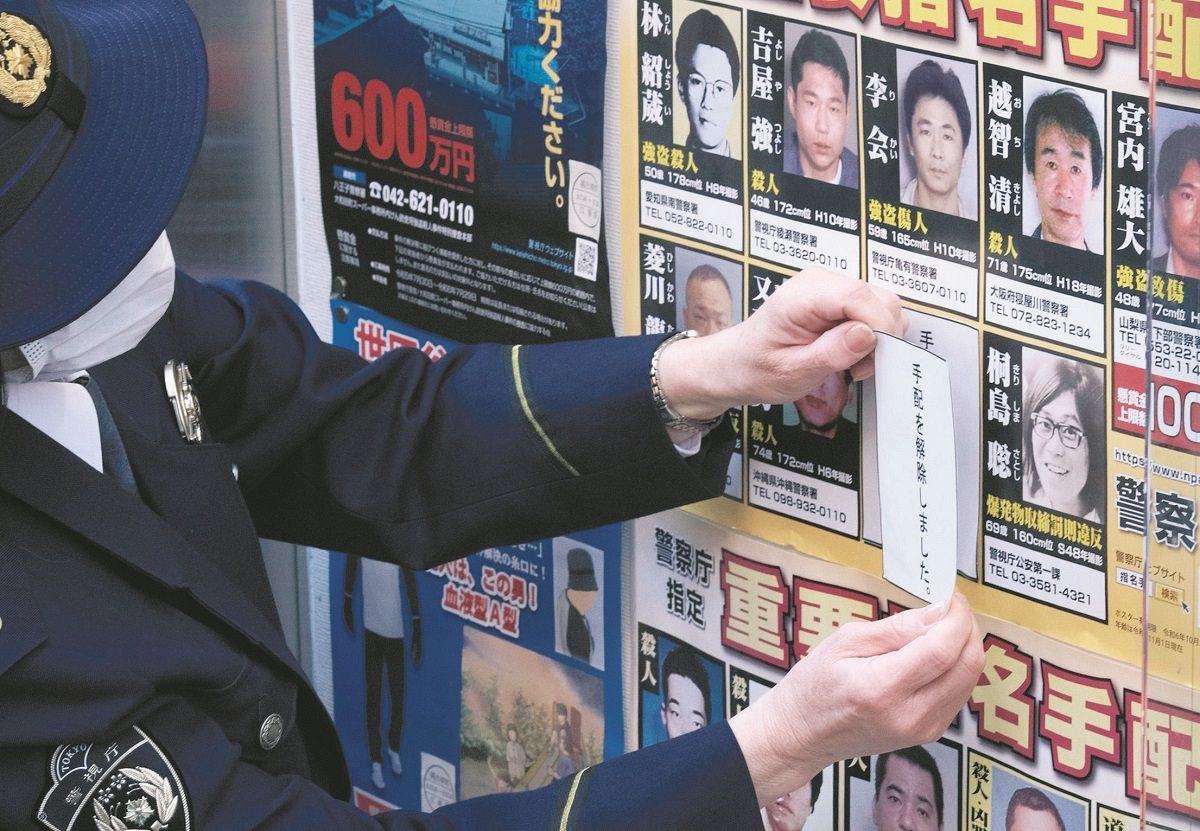
In Japan, too, the story of “former radicals living on the run” is by no means a distant reality. In the Satoshi Kirishima case, which came to light in 2024, a man wanted for his involvement in a series of corporate bombings in 1974–75 as a member of the militant group “East Asia Anti-Japanese Armed Front” went into hiding for approximately 49 years, living and working as a live-in employee at a construction company in Fujisawa City, Kanagawa Prefecture, under the alias “Hiroshi Uchida.” He came forward on his own when admitted to a hospital in Kamakura City with terminal stomach cancer and died four days later, on January 29, 2024, at the age of 70; DNA testing confirmed his identity. Bob’s life—living quietly with his daughter while relying on medication—somehow bears the shadow of this case.
Does Love Transcend Ideology? — The Essential Theme of This Film
I think the heart of this action film isn’t about politics or rebellion—it’s really a story about love.
In the film, both the “revolutionary group” and the “white supremacist secret society” are shown as cold systems that ignore people’s feelings. Sixteen years later, the revolutionary group has become so rigid that it turns away a father just because he forgot a password. At the same time, the secret society tries to get rid of Rock Joe for breaking their rules.
Bob races against time, armed only with his love for his daughter. Ideology, lineage, and passwords don’t matter. In the face of the power of love Bob displays to see his daughter, both the revolution’s password and the secret society’s rules are reduced to equally “irrelevant” things.
At the end, Bob’s mother, Perfidia, says, “We failed. Maybe you will not. Maybe you will be the one who puts the world right.” These words pass hope to the next generation. Here, “revolution” goes beyond politics and becomes a personal change that starts with loving those closest to you.
The film received widespread critical praise but also faced backlash from some viewers, likely due to its political themes.
Some people criticize the film for focusing on a white supremacist secret society and a left-wing revolutionary group, saying it feels like “political preaching by Hollywood elites.” I understand where that view comes from.
But director Anderson’s take on white supremacist groups is more satirical than harsh. He sees “even the most powerful figures are, at their core, just children playing in a secret hideout,” which keeps the film from feeling like propaganda.
Whether you see this as just a political film or as a smart look at the absurdity of power really depends on your own perspective.
Summary: What a Failed Father Taught His Daughter—Something More Important Than Revolution
The movie is funny, touching, and quietly emotional. It shows a struggling father who can’t even remember his password, doing everything just for his daughter. What matters isn’t DNA or beliefs, but the time they share. The way this simple idea is told over 162 minutes of action is impressive.
With Sean Penn’s great acting, Johnny Greenwood’s unusual music, and the gritty look of VistaVision, I felt like I had seen something that only movies can create.
Maybe this “endless series of battles” isn’t finished yet.