The film The Lord of the Rings: The Return of the King is the concluding chapter of the trilogy based on J.R.R. Tolkien’s timeless masterpiece. The grand saga built up over the previous films, The Fellowship of the Ring and The Two Towers, finally reaches its climax.
This film won 11 Academy Awards. It succeeded in every nominated category: Best Picture, Best Director, Best Adapted Screenplay, Best Film Editing, Best Art Direction, Best Costume Design, Best Makeup, Best Original Score, Best Original Song, Best Visual Effects, and Best Sound Effects Editing. This ties the record for most wins in a single year, shared with Ben-Hur (1959) and Titanic (1997).
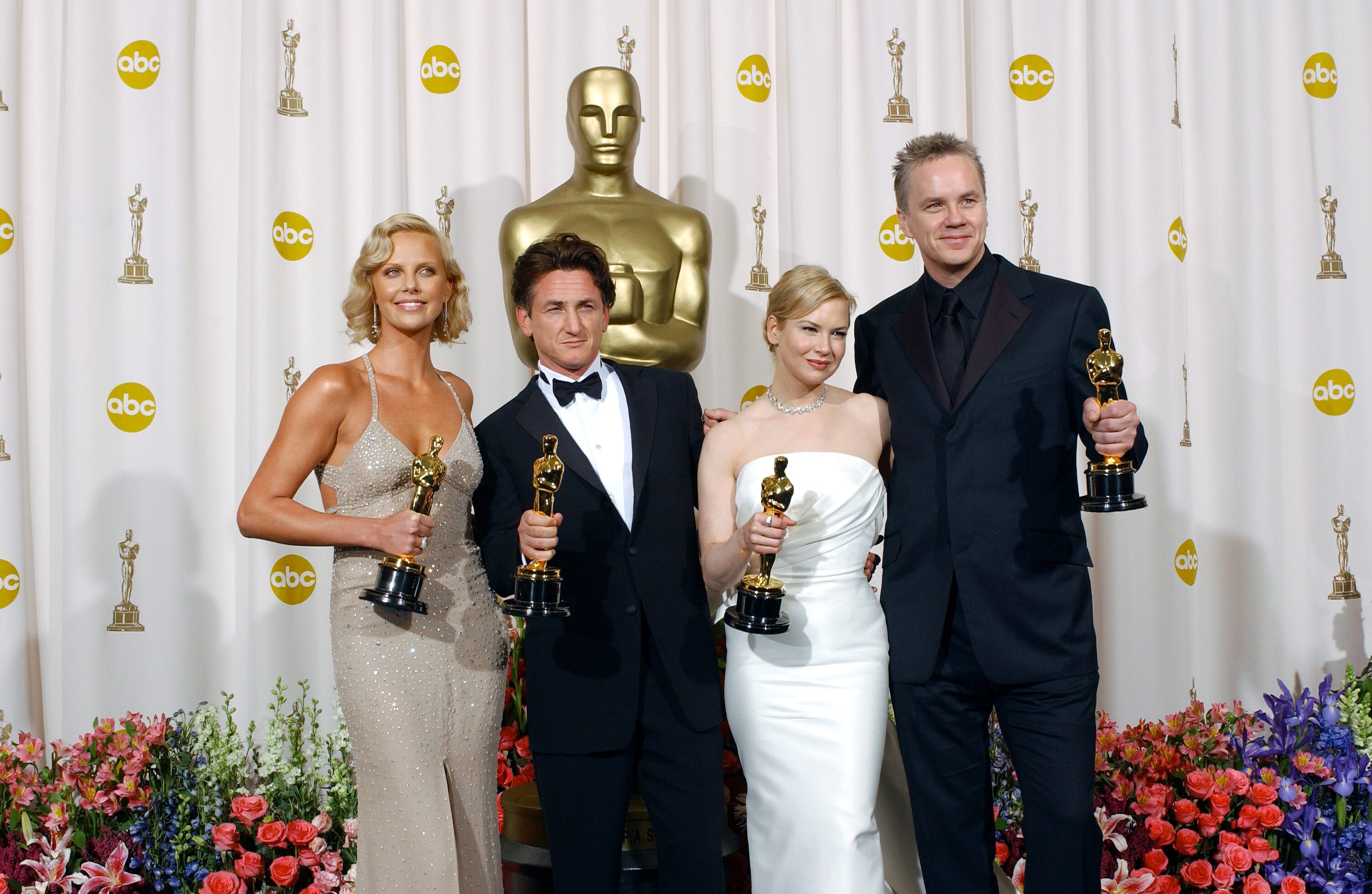
Particularly significant is that it became the first fantasy film to win the Academy Award for Best Picture. Until then, fantasy and science fiction films, no matter how outstanding, were treated as mere “entertainment” and denied the honor of Best Picture. This film broke that barrier, ushering in a new era where fantasy films, too, should be recognized as works of art.
The Passion and Challenge of Bringing Tolkien’s World to Life
The Structural Beauty of an Ensemble Drama Woven from Multiple Perspectives
The film The Lord of the Rings: The Return of the King adopts an ensemble drama form, depicting multiple perspectives in parallel. The structure in which Frodo and Sam’s journey, Aragorn and the others’ battle, and Pippin and Merry’s growth unfold simultaneously, converging into a single climax, was masterful.
However, if I were to be picky, there were moments where Frodo and Sam’s journey felt slightly disjointed. Particularly in the final stretch towards Mount Doom, it felt somewhat rushed, perhaps due to production time constraints. Still, extending it further would likely have made it redundant, so the current form might have been the absolute limit of balance.
The nearly four-and-a-half-hour runtime is packed with content. It never feels dull. When I saw the Special Extended Edition in theaters, which runs almost half a day across the trilogy, no one left their seat. Everyone stayed through the credits.
The Deep Resonance of the Long Ending
The film’s long ending stands out. Even after the Ring is destroyed in Mount Doom and Sauron falls, the story continues for more than 30 minutes.
Aragorn’s coronation, the Hobbits’ return to the Shire, Sam’s wedding, and Frodo’s departure are all shown with great care. This extended ending is the film’s very essence.
This is more than just an adventure story. By showing what happens to the characters after their journey, the film leaves a lasting impact.
Frodo’s departure from the Grey Havens with the Elves is deeply moving. The Ring’s burden left scars on his heart and body. He cannot return to a peaceful life and chooses the realm of the Undying. His farewell to Sam, Merry, and Pippin is heartbreaking.
Frodo’s words, “I won’t say goodbye,” and Sam’s tears show their friendship and the pain of parting. The story ends with Sam returning home to his wife and children. His words, “I’m home,” mark the end of one journey and the start of another.
The Challenge of Bringing Tolkien’s Vast World to Life
Tolkien’s The Lord of the Rings is famous for its vast setting and rich detail. He created not just the main trilogy, but also The Silmarillion and numerous appendices. Middle-earth’s history, languages, and cultures are finely built. Bringing this world to the screen was a great artistic adventure.
Director Peter Jackson and his team faced tough choices. How closely should they follow the source material? Where should they adapt for film? They had to balance fan expectations with accessibility for new audiences. This was no ordinary challenge.
Filmed over about 18 months in New Zealand’s stunning landscapes, this project was unique because all three films were shot simultaneously. It would not have been possible without the team’s passion and hard work.
The VFX team’s creative energy was also remarkable. They challenged visual expression far beyond the technical standards of the time, and the motion capture technology used for Gollum revolutionized future filmmaking. The art team built sets with meticulous attention to detail to bring Middle-earth’s diverse locations to life. Costume designers created thousands of garments reflecting the various races and cultures.
Howard Shore’s music was essential. He kept a consistent theme across the trilogy. Each scene’s music fits perfectly. This was a true artistic achievement.
The Return of the King stands as a cinematic monument. Directors, actors, screenwriters, VFX artists, designers, and musicians together brought Tolkien’s world to life.
This ending leaves a warm, hopeful, and poignant resonance. It makes us want to believe: “And after that, Frodo Baggins lived happily ever after until he passed away.” The film’s afterglow is hopeful and moving.
Battle Scenes of Overwhelming Scale
The visual highlights of The Lord of the Rings: The Return of the King are undoubtedly its two large-scale battle scenes. While the Battle of Helm’s Deep in The Two Towers was spectacular, this film surpasses it with even greater intensity, overwhelming the viewer.
The Battle of Minas Tirith: A Desperate Struggle Where Despair and Hope Collide
The battle of Minas Tirith is breathtaking and historic. The beautiful white city is besieged by Mordor’s armies—pure despair. Nazgûl attack from the sky. Siege engines break the gates. Orcs swarm the walls.

The Mûmakil, giant elephant-like beasts, are unforgettable. They break walls and trample soldiers, spreading terror. In sharp contrast, King Théoden’s Rohirrim charge into battle as the morning sun rises. Hope breaks through despair.
King Théoden’s speech is unforgettable. He cries, “Fear not death! Raise your swords!” and rallies his men. This shows how much he has changed since the last film. In this battle, Jackson’s skills shine. CGI and live-action merge well. Camera work and music put you in the heart of the battle.
The Desperate Battle at the Black Gate, the Last Hope
The final fight at Mordor’s Black Gate has a different kind of tension than the one at Minas Tirith. Victory is not the goal. It is a desperate move to distract the enemy. This gamble buys time for Frodo to destroy the Ring.
Aragorn’s speech as King is iconic. Merry and Pippin rush in first, inspired by him. Their friends follow. Their courage and friendship shine as they face the Orc army.
The bond between Frodo and Sam—the burden of saving the world borne by the small ones
The most moving part is Frodo and Sam’s deepening bond. Their journey, started in The Two Towers, comes to a close now.
Frodo Suffering Under the Ring’s Burden
Elijah Wood’s Frodo faces his harshest trial. The Ring’s weight is mental, not just physical. He gets dark circles under his eyes, pale skin, and a ghostly look. It is painful to watch.
Particularly striking is the scene in which Gollum’s trickery drives Sam away. He doubts and pushes away his most trusted friend. No scene speaks more eloquently to the Ring’s terrifying power than this moment. As viewers, we want to shout, “Frodo, no! Trust Sam!” Yet Frodo’s inability to do so makes us truly feel the depth of the Ring’s curse.
Sam’s Devoted Friendship
Samwise Gamgee, played by Sean Astin, is the character who shines brightest in this film. Throughout the trilogy, he was always by Frodo’s side, but in this installment, his true worth is fully revealed.
Even when pushed away by Frodo and left alone, Sam never gives up. Learning that Frodo has been attacked by the giant spider Shelob, he bravely confronts it and rescues his friend. And most moving of all is the scene where he carries Frodo, who can no longer walk, on his back up Mount Doom.
“I cannot carry the Ring, but you can carry him.” This line encapsulates the essence of friendship. Sam cannot bear the Ring’s burden himself. But he can carry his burdened friend upon his own back. This portrayal of devoted love and friendship is impossible to watch without tears.
In this film, Sam is neither a warrior wielding a great sword nor a wizard wielding magic. Yet his “unwavering resolve” and “love for his friend” became the greatest force that saved the world. His performance was truly remarkable, and his Academy Award nomination for Best Supporting Actor is well deserved.
Aragorn: From Exiled King to True King
Viggo Mortensen’s Aragorn undergoes one of the most significant character arcs across the trilogy. In The Fellowship of the Ring, he despised his royal bloodline and rejected the throne. Here, he demonstrates the true measure of a king.
The Resolution to Conquer Fear
The scene where Aragorn commands the Army of the Dead symbolizes his growth. His declaration, “I fear not death,” as he enters the dark mountain, reveals a king no longer plagued by doubt, but possessed of unwavering resolve. While Legolas and Gimli hesitate, Aragorn advances resolutely alone. The sight of his cloak billowing in the wind was a visually striking and memorable moment.
Leadership as a True King
The speech at the Black Gate is a key moment that marks Aragorn’s emergence as a true king. Even when the odds are against him, he inspires his friends and gives them hope. This is what makes a real king.
He is shown not as a general with a huge army, but as a warrior fighting alongside a few close friends. This shows real leadership and what it means to be a king. When he refuses Sauron’s temptation and shouts “For Frodo!” before charging, it shows true courage and friendship.
His love for Arwen—more precious than the crown
The romantic element between Aragorn and the Elf princess Arwen also holds significant weight in this work. Arwen, an immortal Elf, choosing to renounce immortality for Aragorn, speaks volumes about the depth of her love.
The scene where the two embrace after reuniting following the coronation is a moving conclusion fitting for two who have endured a long and arduous journey. Aragorn’s choice to be with his beloved rather than wear the crown conveys a human warmth.
Aragorn’s stature stands in stark contrast to Denethor’s incompetence.
Meanwhile, the film also features a character serving as a clear cautionary example: Gondor’s Steward, Denethor. Portrayed by John Noble, this character repeatedly makes incompetent decisions throughout, frustrating the viewer.
Denethor despises his second son, Faramir, while showering his eldest son, Boromir, with undue favor. He orders Faramir on a reckless mission to retake Osgiliath, resulting in Faramir being mortally wounded. Then, convinced Faramir is dead, Denethor throws himself into the fire in despair and perishes.
Denethor’s poor decisions highlight Aragorn’s true leadership. Both are leaders, but Denethor is ruled by his emotions and makes bad choices, while Aragorn stays calm and chooses wisely. This contrast shows Aragorn’s real qualities as a king.
Key Scenes Added in the Extended Edition
The Lord of the Rings: The Return of the King exists in two versions: the theatrical cut and the Special Extended Edition. The theatrical cut runs approximately 3 hours and 21 minutes, while the Extended Edition is about 4 hours and 23 minutes—over an hour longer. However, it contains a crucial scene.
The Confrontation with Saruman
The most crucial scene added in the Extended Edition is the confrontation with Saruman. The theatrical version completely omits what happened to Saruman after the fall of Isengard in The Two Towers. The Extended Edition adds a scene where Gandalf and his companions arrive at Isengard and confront Saruman.
The verbal exchange between Gandalf and Saruman is a crucial scene demonstrating the disparity in their status as wizards. The moment Gandalf destroyed Saruman’s staff and stripped him of his power was visually striking. Furthermore, the ending, in which Saruman’s loyal servant Grima Wormtongue, unable to endure years of oppression, finally stabs his master to death, is an ironic scene that symbolizes the chain of betrayal.
While the theatrical cut’s omission of this crucial scene was likely due to runtime constraints, it remains a deeply regrettable decision for fans. Only the Extended Edition allows one to experience the story in its complete form.
The Terrifying Mouth of Sauron, Cut from the Film
Another crucial added scene is the encounter with the “Mouth of Sauron.” Appearing before Aragorn’s company at the Black Gate to negotiate, this emissary is Sauron’s spokesperson, possessing a massive mouth and hideous form.
He brandishes Frodo’s mithril chainmail and declares, “Your friend has been captured and died in agony.” At this moment, the Hobbits despair and weep. Gandalf, however, calmly shouts, “Silence!” and Aragorn severs the messenger’s head.
This scene is important because it shows their determination to keep fighting, even after hearing their friend has died. Although it was cut from the theatrical version, it is a great addition in the Extended Edition and adds more depth to the story.
The Tragedy of Gollum, a Pitiable Being Torn Between Good and Evil
Gollum, portrayed through motion capture by Andy Serkis, plays a crucial role in this film as well. The opening features a flashback scene depicting the moment he obtained the Ring, back when he was still called Sméagol.
His transformation into the hideous Gollum over the long years, achieved by killing his friend Déagol to seize the Ring, starkly illustrates the Ring’s terrifying curse. This opening scene serves as a crucial introduction, symbolizing the film’s dark tone.
In this film, Gollum betrays Frodo and Sam by leading them to the giant spider Shelob. His actions are not just out of malice, but also because he is addicted to the Ring. When he finally gets it back, his happiness is painful to watch, like someone reunited with something they can’t let go of.
And so Gollum falls into the lava, clutching the Ring. His demise was both pitiable and perhaps a moment of peace, freed from the Ring’s curse. Ironically, Gollum’s death destroyed the Ring and saved the world.
Music and Visual Beauty—Howard Shore’s Epic Score
Howard Shore’s contribution to the music of The Lord of the Rings trilogy cannot be praised enough. In this film, too, his grand orchestral compositions greatly enhance the narrative.
Particularly memorable are the heroic music accompanying the Rohirrim’s charge, the tense score during Frodo and Sam’s ascent of Mount Doom, and the moving theme at the conclusion. Annie Lennox’s theme song “Into the West,” which won the Academy Award for Best Original Song, beautifully enhances the story’s lingering resonance.
The visual beauty also boasts numerous noteworthy aspects. Filmed against the backdrop of New Zealand’s magnificent landscapes, this work achieves a beauty that truly seems to have visualized Middle-earth itself. The white city of Minas Tirith, the desolate lands of Mordor, and the lava of Mount Doom—all are depicted on an overwhelming scale.
The integration of CGI and live-action is masterful, achieving astonishing quality considering the technical standards of the time. Gollum’s motion capture technology, in particular, had a profound influence on subsequent filmmaking.
Summary: A timeless tale woven from friendship and courage
The Lord of the Rings: The Return of the King is more than just a fantasy film. It is a lasting masterpiece in movie history. Its story, stunning visuals, and moving drama come together to leave a deep impression on viewers.
The bravery of the hobbits, the exiled king’s return, the wizard’s wisdom, and the power of friendship overcoming challenges are themes that will stay with people for years to come.
Winning 11 Academy Awards shows that this film was seen as more than just entertainment—it was recognized as art. A fantasy film winning Best Picture was a big moment in movie history.
The film ends on a warm, touching, and hopeful note that makes you want to believe, “And after that, Frodo Baggins lived happily ever after until he passed away.” The Lord of the Rings: The Return of the King is a story that stays with you long after the credits finish.
If you haven’t seen this masterpiece yet, make time to watch it. The Special Extended Edition is especially worth it. The adventure in Middle-earth will move you and may even change how you see things.